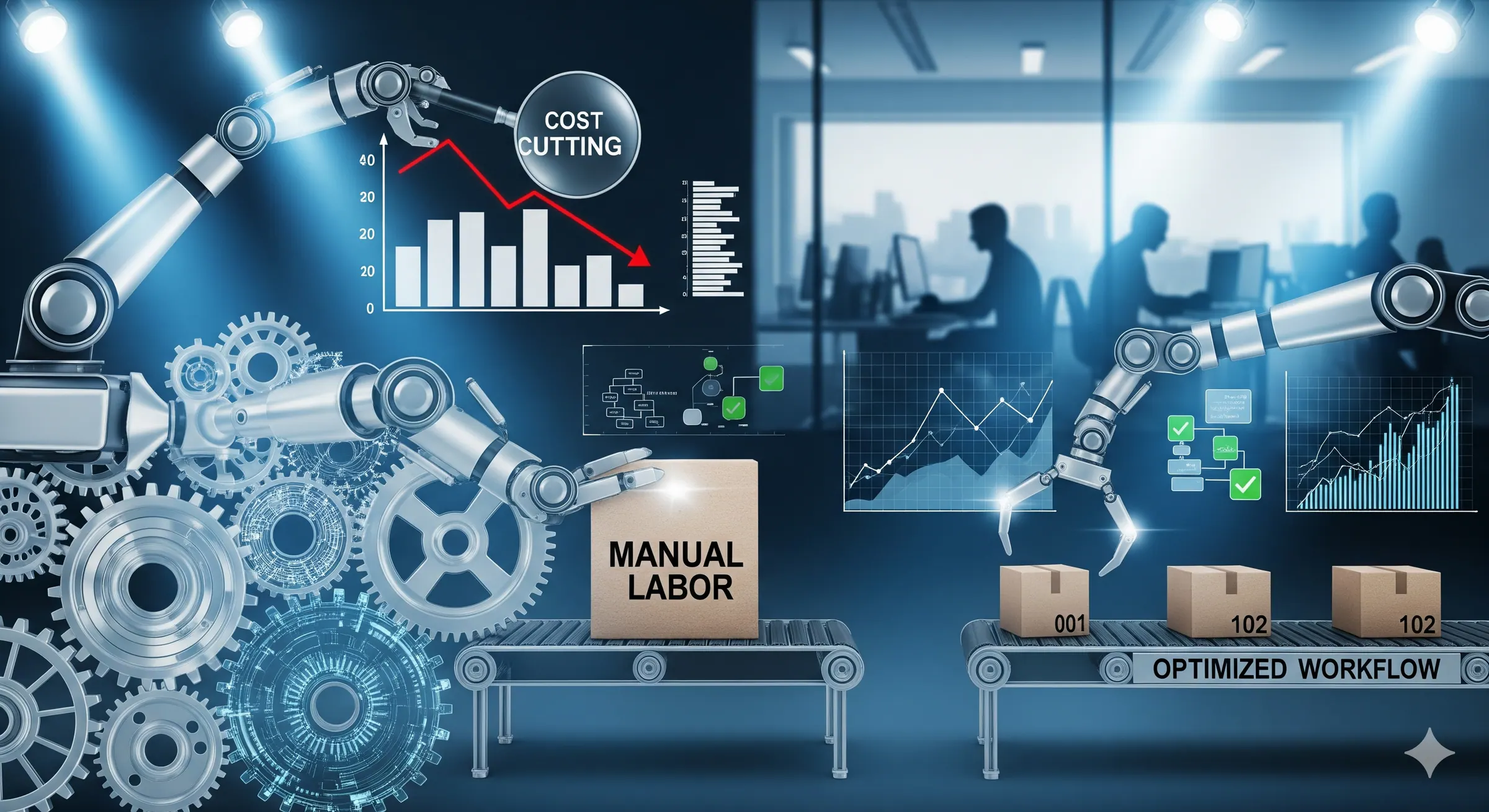
AI agents and workflows are not interchangeable
Workflow automation follows defined triggers, conditions, and actions. When a form is submitted, create a CRM record, assign an owner, send a confirmation, and schedule a reminder. The process is predictable and should produce the same result when the same conditions occur.
An AI agent is useful when the system must interpret unstructured information, choose among possible actions, or communicate in natural language. It might summarize an inquiry, identify intent, answer from a knowledge base, qualify a lead, or decide which approved workflow should run.
Most reliable business systems need both. AI handles interpretation; deterministic automation handles critical actions.
Use workflow automation when the rules are clear
- Moving data between forms, CRM, calendars, and dashboards
- Sending confirmations, reminders, and internal notifications
- Assigning records based on service, region, value, or availability
- Generating recurring reports or documents from structured data
- Creating tasks when deadlines or pipeline conditions are reached
- Synchronizing order, inventory, booking, or customer status
Rules-based automation is easier to test, audit, and predict. Businesses should not add AI to a step that a clear condition can handle more safely.
Use an AI agent when interpretation creates value
- Understanding a caller or website visitor's intent
- Extracting structured details from emails, documents, or conversations
- Answering questions using approved company knowledge
- Summarizing meetings and recommending next actions
- Classifying support requests or sales opportunities
- Drafting personalized communication for human review
- Coordinating several tools when the correct path depends on context
AI output is probabilistic, so the system needs limits. The agent should have defined tools, restricted permissions, approved data, confidence thresholds, logging, and escalation rules.
A practical example: lead intake
A traditional workflow can save a website form to the CRM and notify sales. An AI-enhanced system can also read an open-text project description, identify the likely service, summarize requirements, flag missing information, estimate urgency using defined criteria, and recommend an owner.
The final database update should still be controlled by validated rules. A high-value or unusual inquiry can require human approval. This combination improves speed while keeping important decisions visible.
How Techsyhub chooses what to automate
We map the process before selecting tools. Each step is evaluated for frequency, time cost, error cost, data quality, decision complexity, customer impact, and exception rate. Repetitive and stable work is automated first because it produces clearer ROI and fewer surprises.
We then decide whether each step needs a rule, an integration, an AI capability, or a person. This prevents “agentic” systems from becoming expensive chains of unnecessary model calls.
Implementation includes monitoring and exception handling. Teams need to see which workflows succeeded, which failed, why an agent escalated, and what data or instruction should be improved. Production automation is an operating capability, not a one-time demo.
Human-in-the-loop does not mean manual everything
A human approval point can protect high-risk actions while automation completes the surrounding work. For example, an agent may analyze a refund request and collect evidence, but a manager approves the refund. The system then updates the order, notifies the customer, and records the decision automatically.
Human review is most useful for financial commitments, sensitive customer cases, legal or regulated decisions, unusual exceptions, and low-confidence AI output.
Start with one measurable workflow
Choose a process with visible pain, clear ownership, reliable inputs, and an outcome you can measure. Establish a baseline for time, volume, delay, errors, and conversion. Launch the smallest complete automation, monitor it, and expand only after it is dependable.
Techsyhub designs AI agents, voice agents, workflow automation, CRM integrations, and operational dashboards as one connected system. The goal is not to replace every human action. It is to give people faster information, fewer repetitive tasks, and better control over the work that matters.